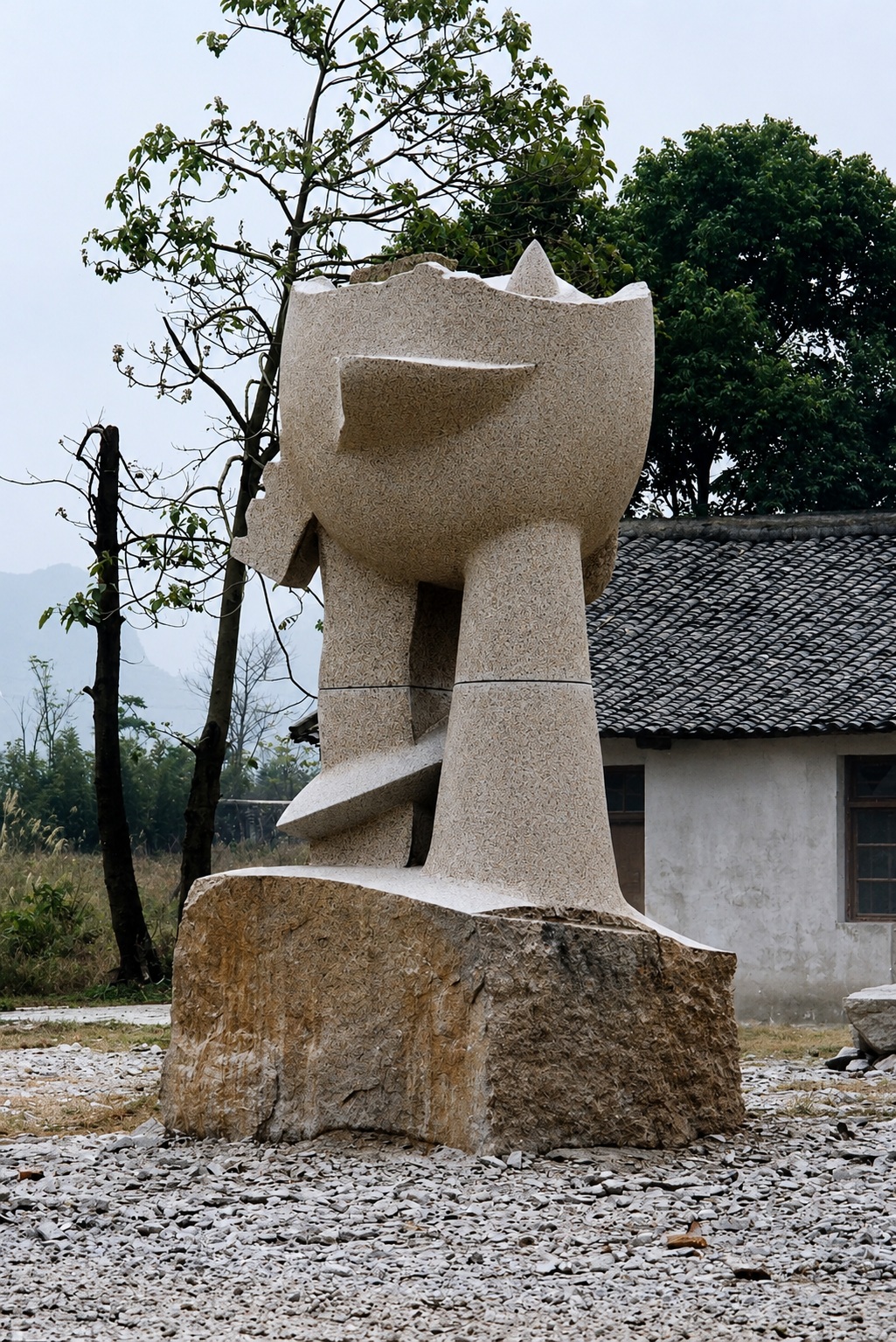
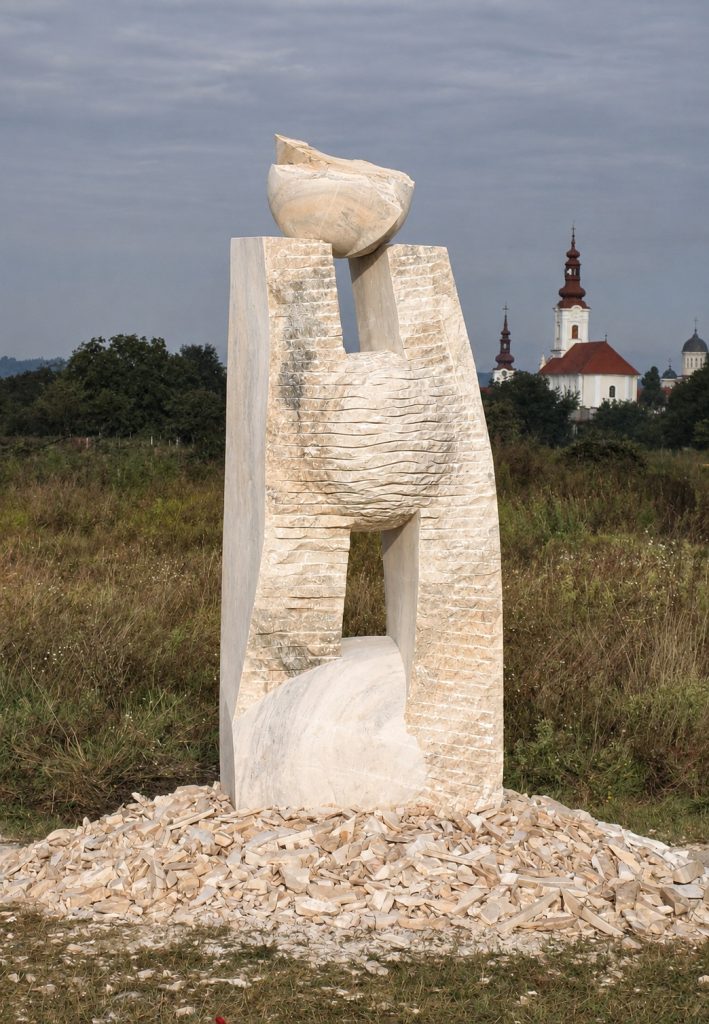
This sculpture, titled Paradice on the Sky, was created in 1999 in Guilin, China, by Japanese sculptor Yasushi Hori.
Artist: Yasushi Hori. He is a renowned Japanese stone sculptor who has participated in numerous international sculpture symposia around the world.
Title: Paradice on the Sky (4.2 m H).
Material: Granite.
Location & Date: Created in Guilin, China, in 1999.
Concept & Theme: Paradice on the Sky is a monumental stone sculpture that explores the relationship between earth, humanity, and the sky. The work rises vertically from a massive natural stone base, with its simplified architectural form gradually transforming the heavy block of granite into an upward-looking composition.
The central form suggests a human or symbolic figure standing between earth and sky. Its broad upper mass and pointed elements at the top create an impression of elevation, aspiration, and movement toward the heavens. Rather than depicting the human body literally, Hori reduces it to essential geometric and organic volumes, allowing the viewer to interpret the sculpture as both a figure and an abstract landscape.
The title Paradice on the Sky evokes the idea of a paradise existing above the earthly world. The sculpture’s verticality reinforces this idea: the massive stone remains firmly connected to the ground, while its upper form appears to reach upward toward the open sky. This creates a poetic tension between gravity and aspiration, earth and heaven, permanence and transcendence.
The work also reflects the distinctive landscape of Guilin, a region renowned for its dramatic limestone mountains and close relationship between natural rock formations, water, and the sky. Hori’s use of a monumental stone block can therefore be understood as a dialogue with the geological character of the region. The sculptor does not completely conceal the original stone; instead, rough surfaces remain visible alongside more precisely carved areas, emphasizing the transformation of natural rock into an expressive human-made form.
The broad, simplified surfaces give the sculpture a quiet monumental presence, while the sharply defined cuts and projecting forms introduce rhythm and movement. The contrast between rough and refined, massive and slender, grounded and ascending gives the work its distinctive character.
Through its monumental scale and upward-reaching composition, Paradice on the Sky expresses themes of aspiration, transcendence, harmony between earth and heaven, and the human search for an ideal or paradise beyond the material world.