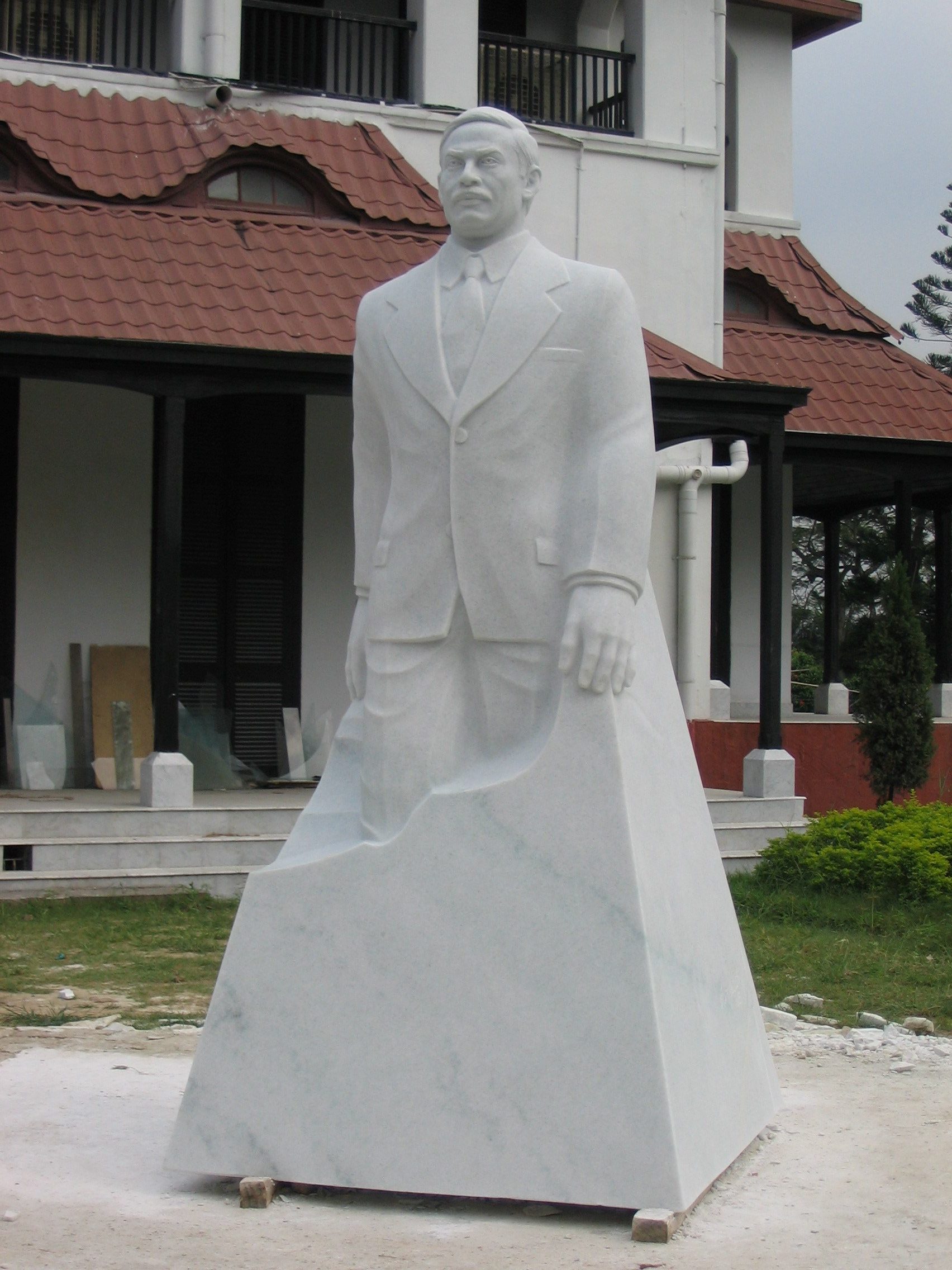
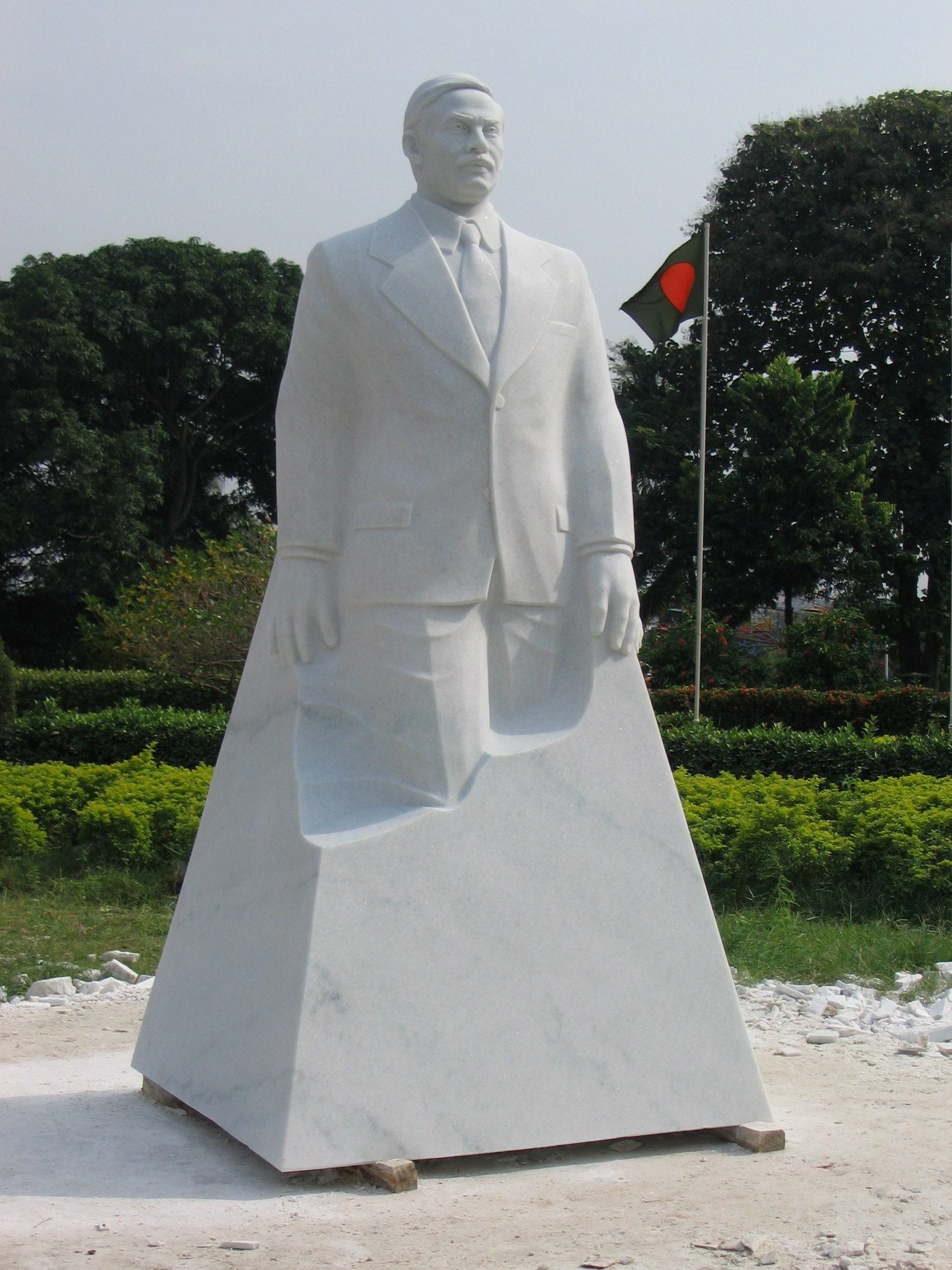
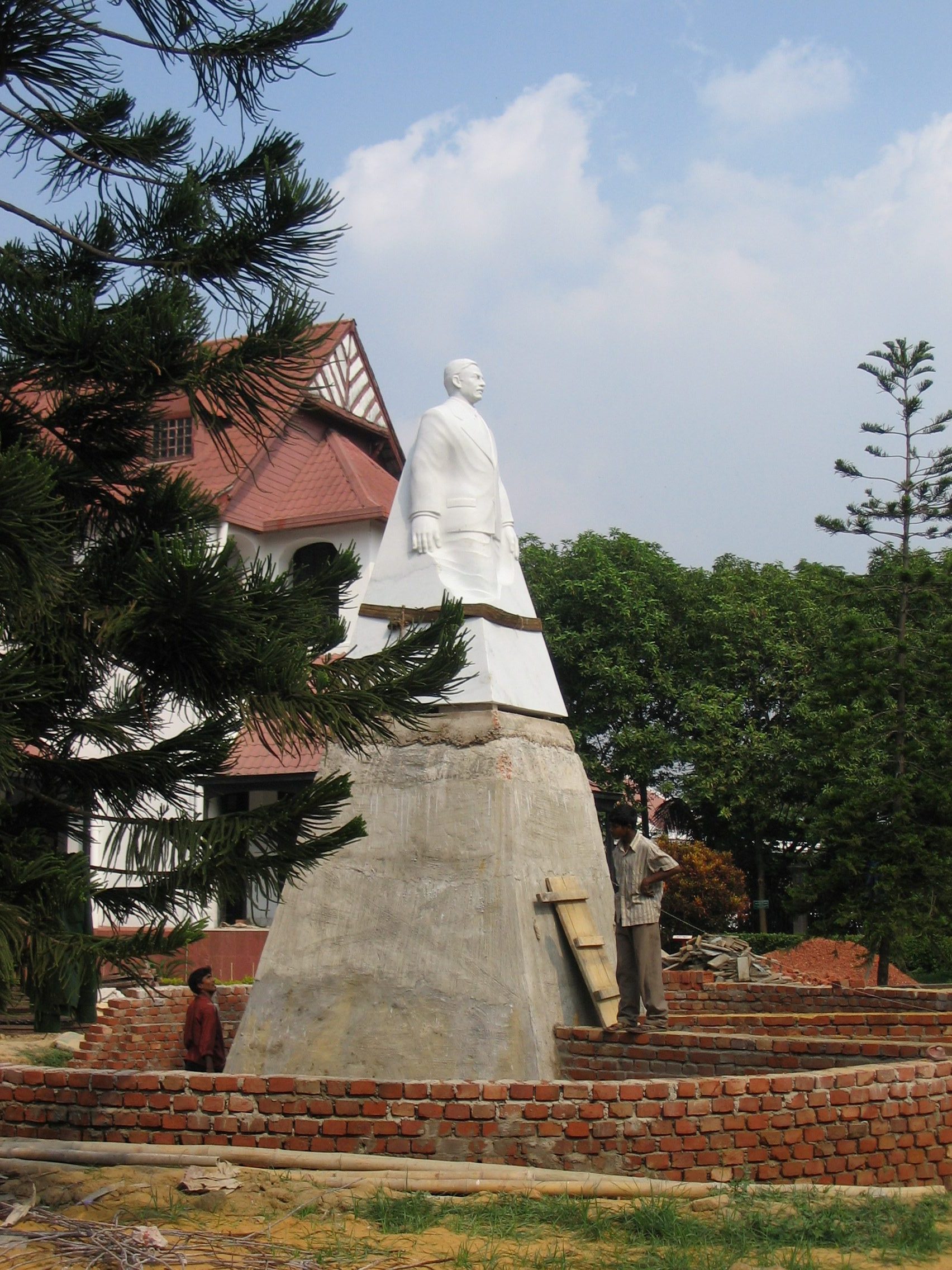
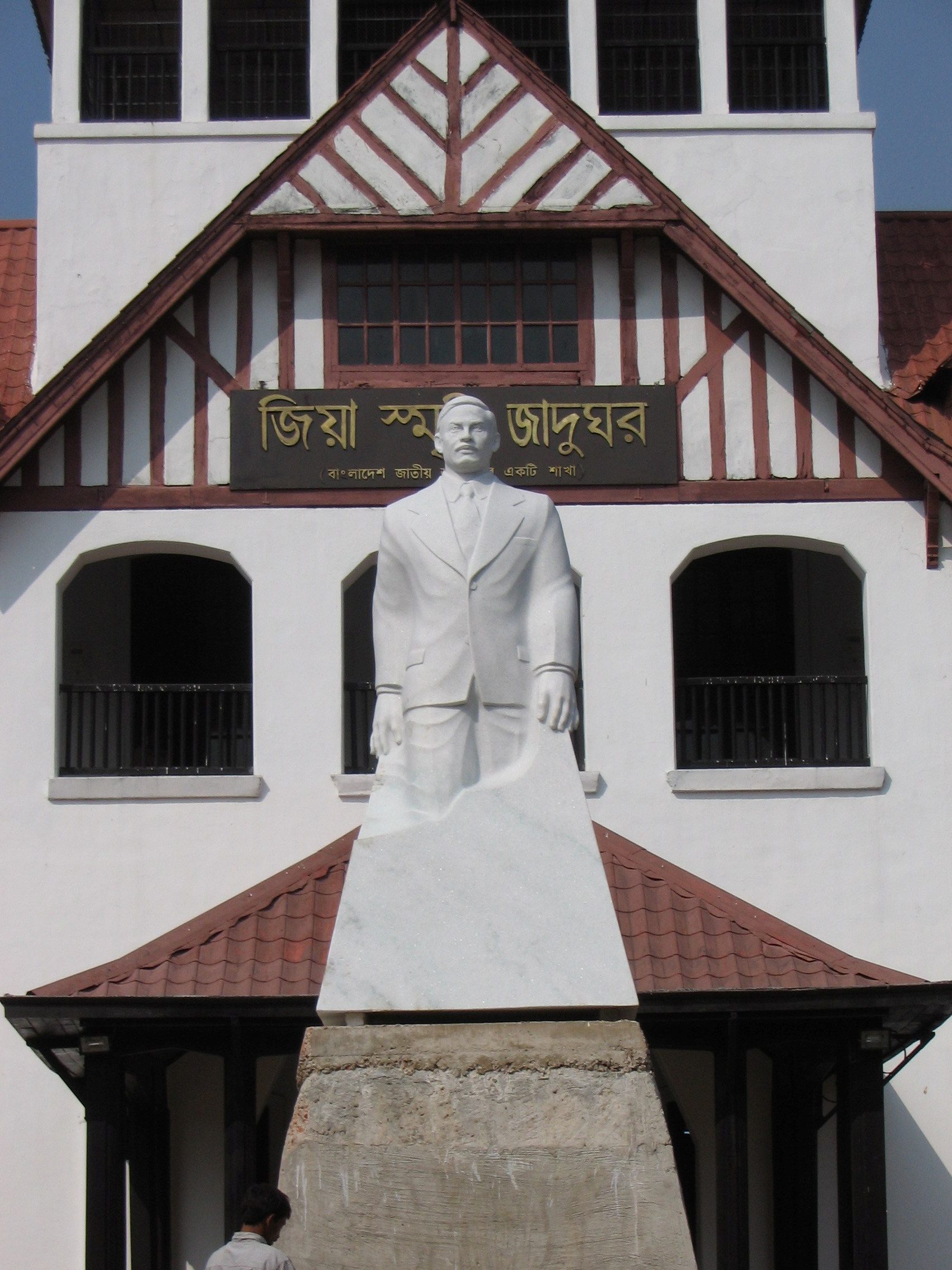
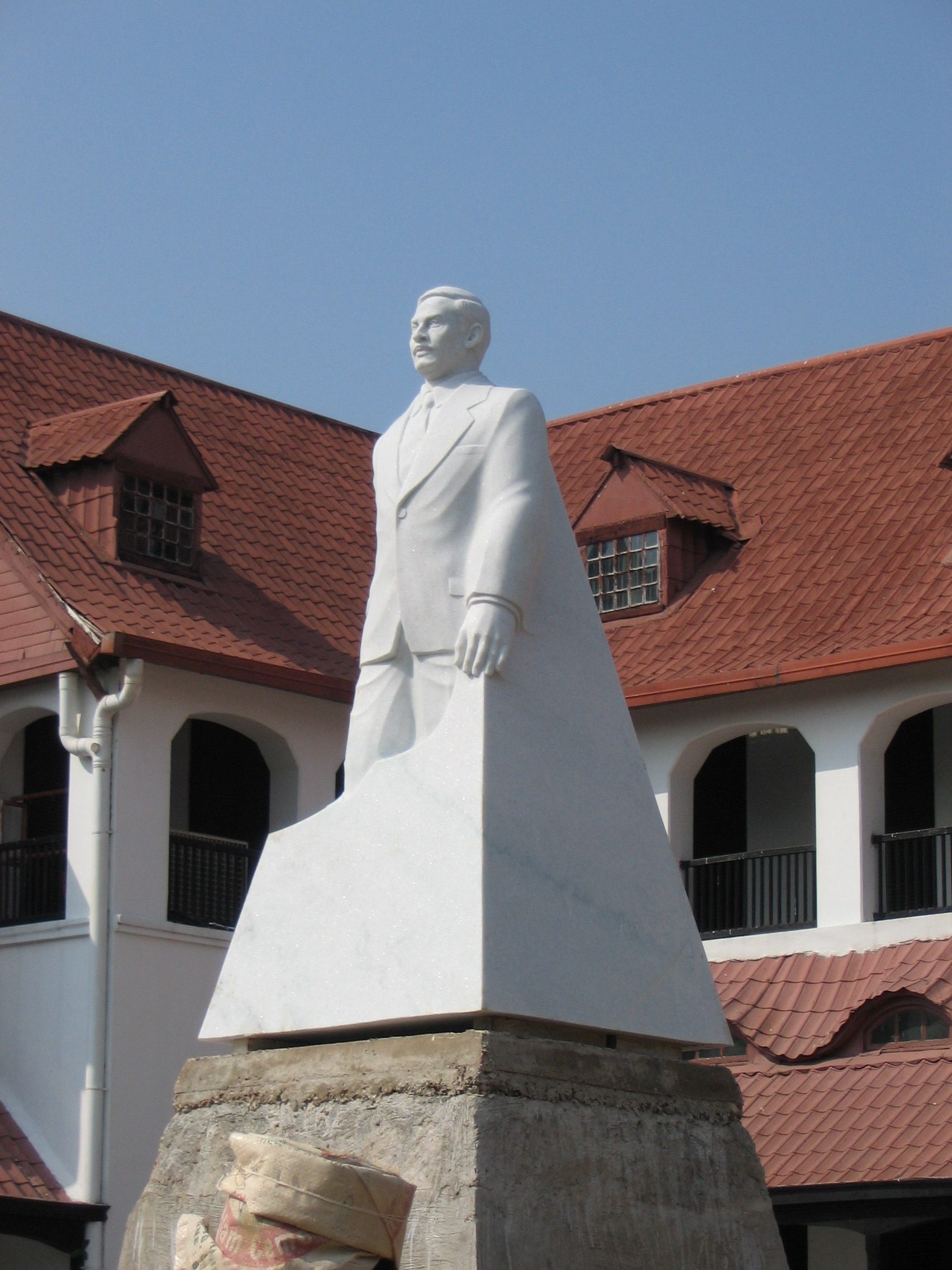
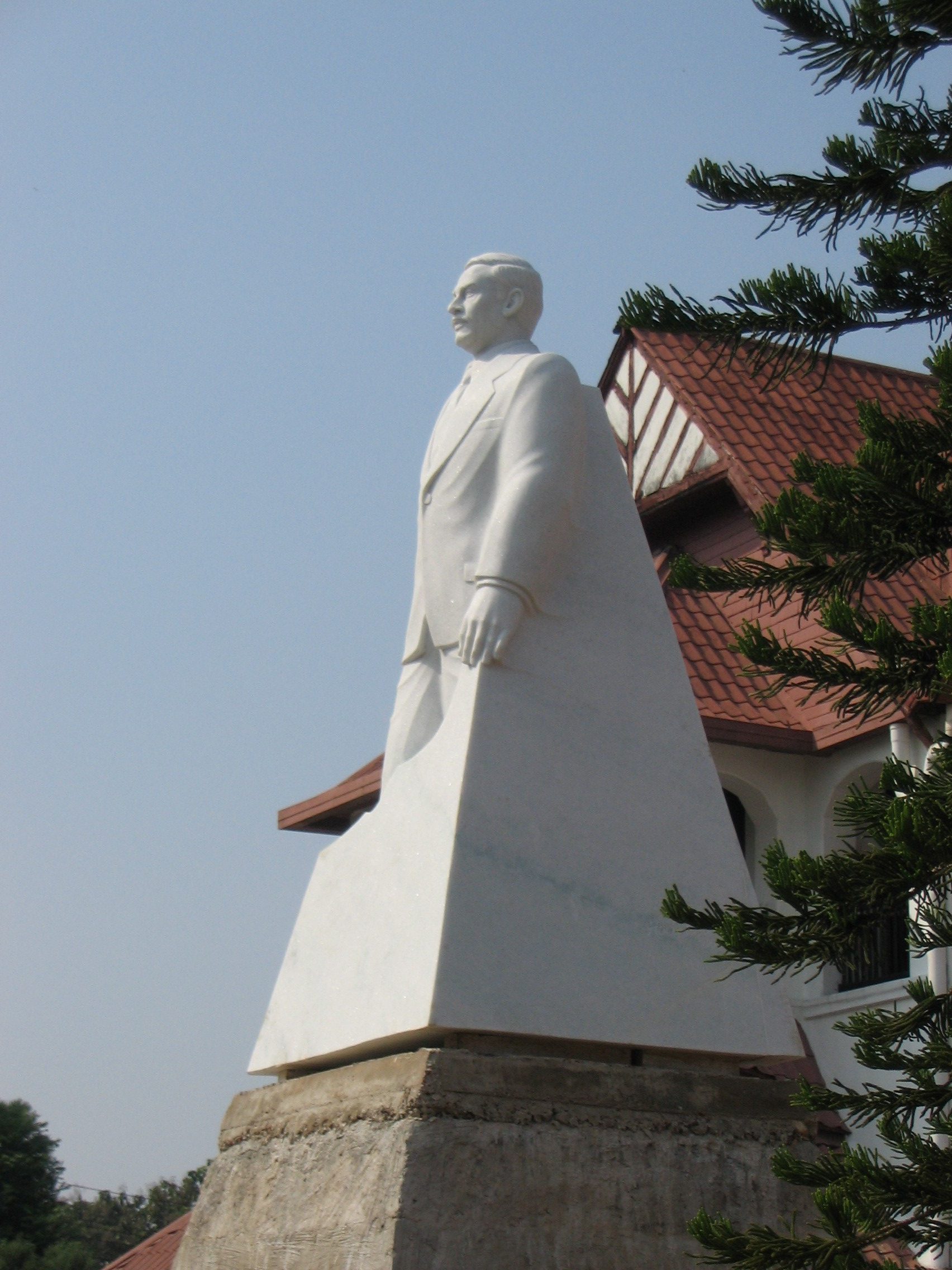
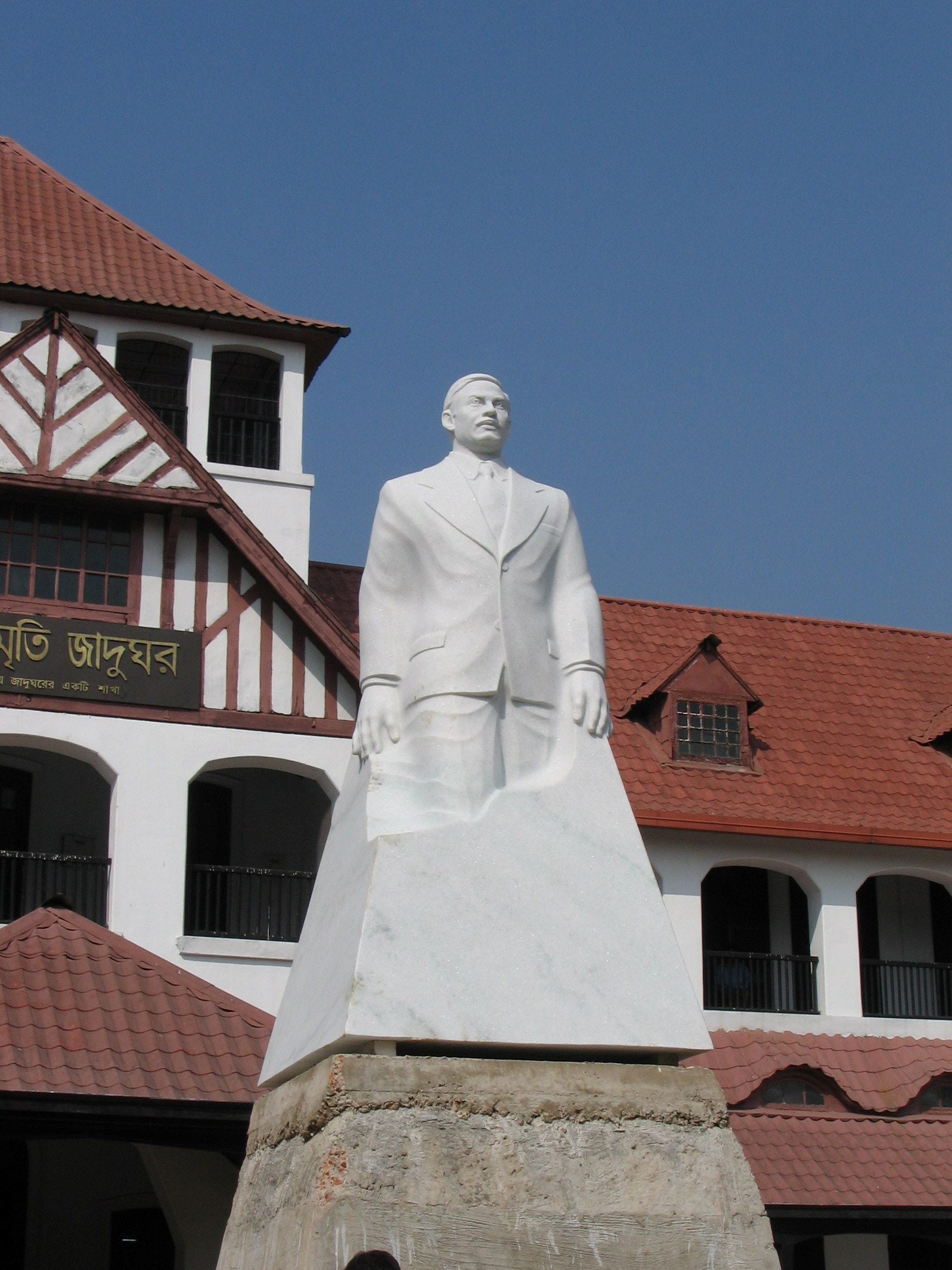
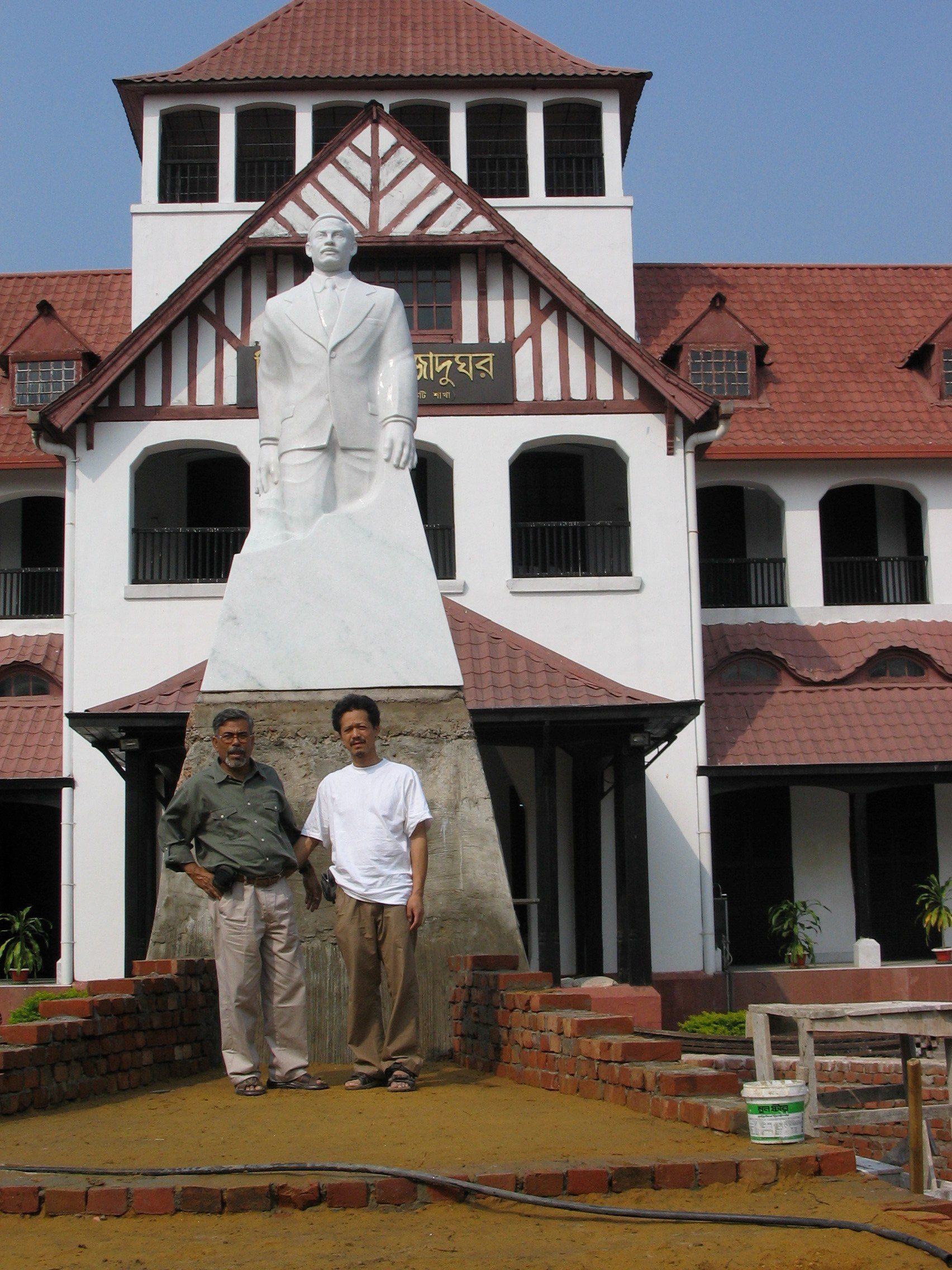
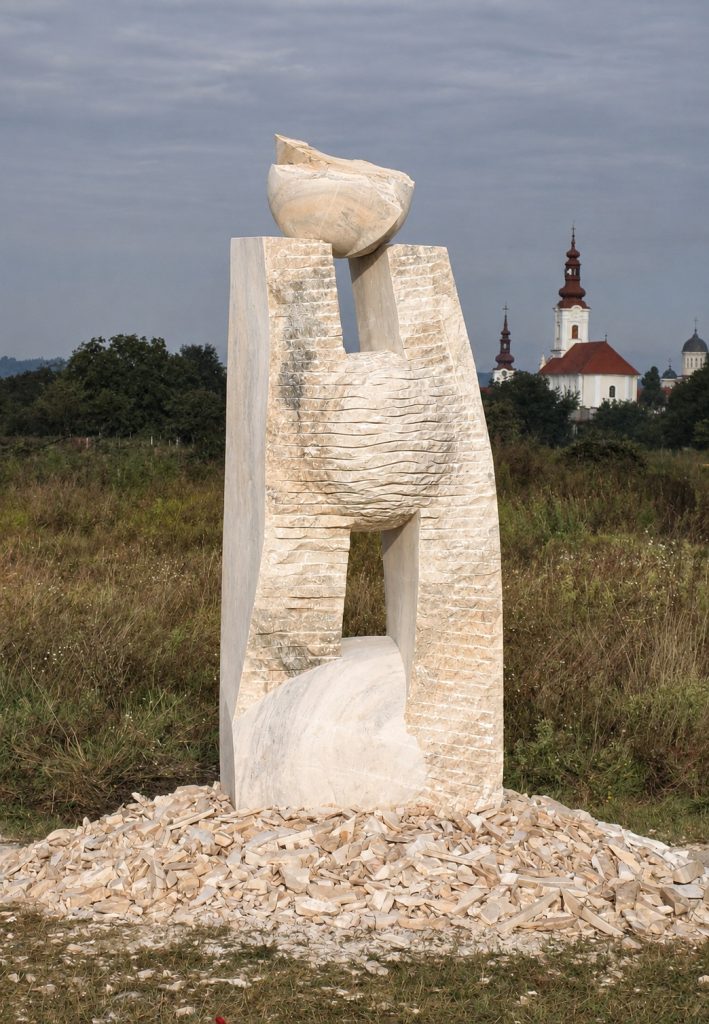
This sculpture, titled President Zia, was created in 2006 in Chittagong, Bangladesh, by Japanese sculptor Yasushi Hori.
Artist: Yasushi Hori, a Japanese stone sculptor known for his international stone-carving projects and participation in sculpture symposia around the world.
Title: President Zia.
Material: White marble.
Location & Date: Chittagong, Bangladesh, 2006.
Concept & Theme: President Zia is a monumental figurative portrait dedicated to Ziaur Rahman, a military officer, freedom fighter and former President of Bangladesh. Ziaur Rahman played a significant role during the Bangladesh Liberation War and later served as President from 1977 until his assassination in Chittagong in 1981.
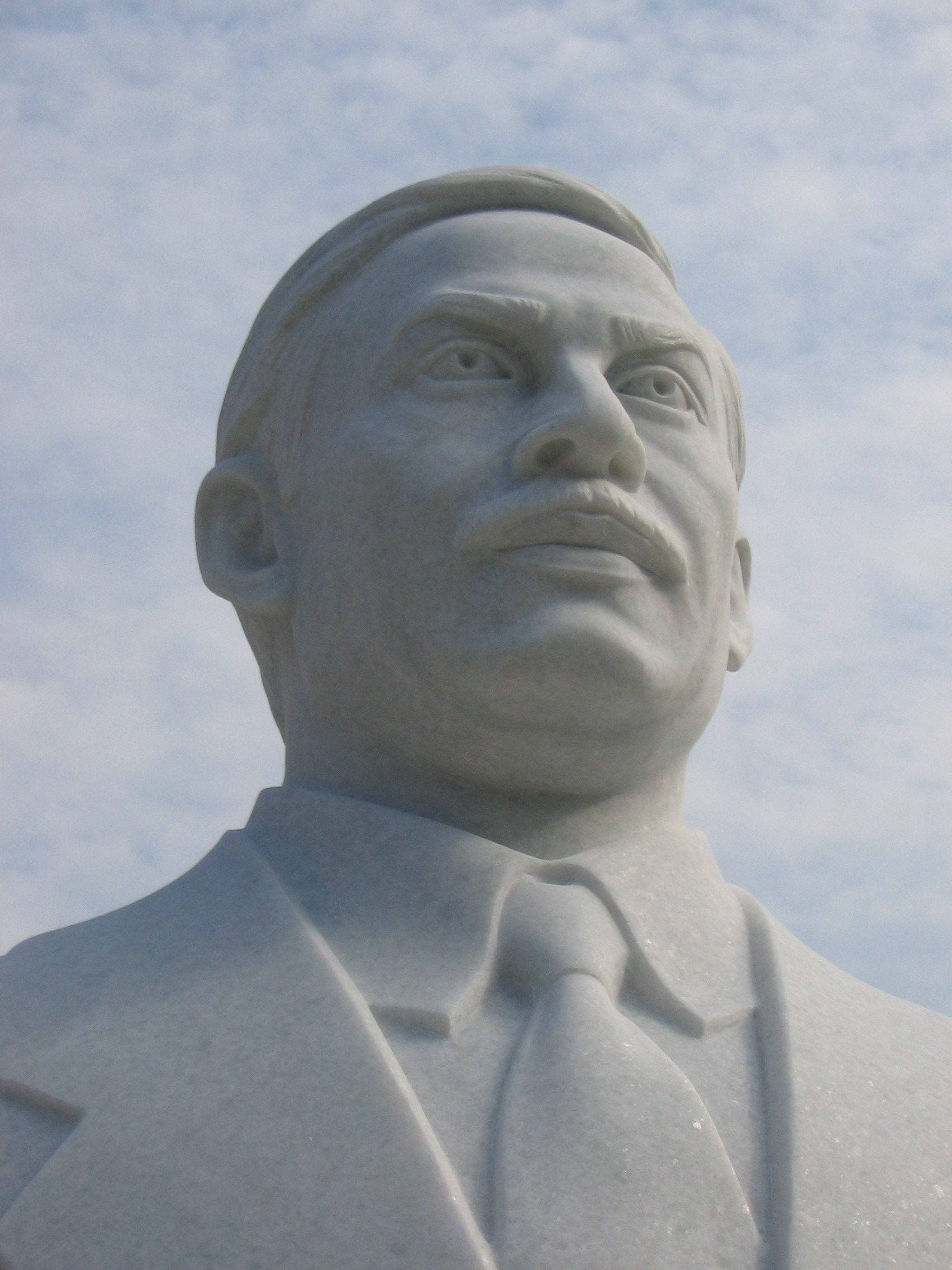
The sculpture presents President Zia standing upright in a formal Western-style suit and tie, conveying an image of authority, dignity and leadership. Hori uses a restrained and monumental treatment, avoiding excessive ornamentation and allowing the recognizable facial features, posture and clothing to communicate the character of the subject.
A particularly distinctive aspect of the work is the large geometric marble mass forming the lower body and base of the figure. Rather than depicting the entire body with naturalistic anatomical detail, Hori allows the figure to gradually emerge from a simplified stone volume. This creates a strong visual relationship between the individual and the monumental mass, giving the portrait an architectural presence.
The carefully modeled face, neatly styled hair, suit, lapels, buttons and hands provide recognizable details, while the broad lower form gives the sculpture a sense of stability and permanence. The contrast between the smooth white marble and the surrounding landscape further emphasizes the monument’s presence.
The work can be understood not only as a portrait, but also as a memorial symbol of political leadership and national history. Its monumental scale and frontal stance reinforce the traditional language of commemorative sculpture, while Hori’s simplified geometric treatment gives the work a contemporary sculptural character.
The sculpture’s location in Chittagong is particularly significant because the city is closely associated with Ziaur Rahman’s role in the Liberation War and with the final events of his life. The official Zia Memorial Museum records that he was assassinated at the Chittagong Circuit House on 30 May 1981.