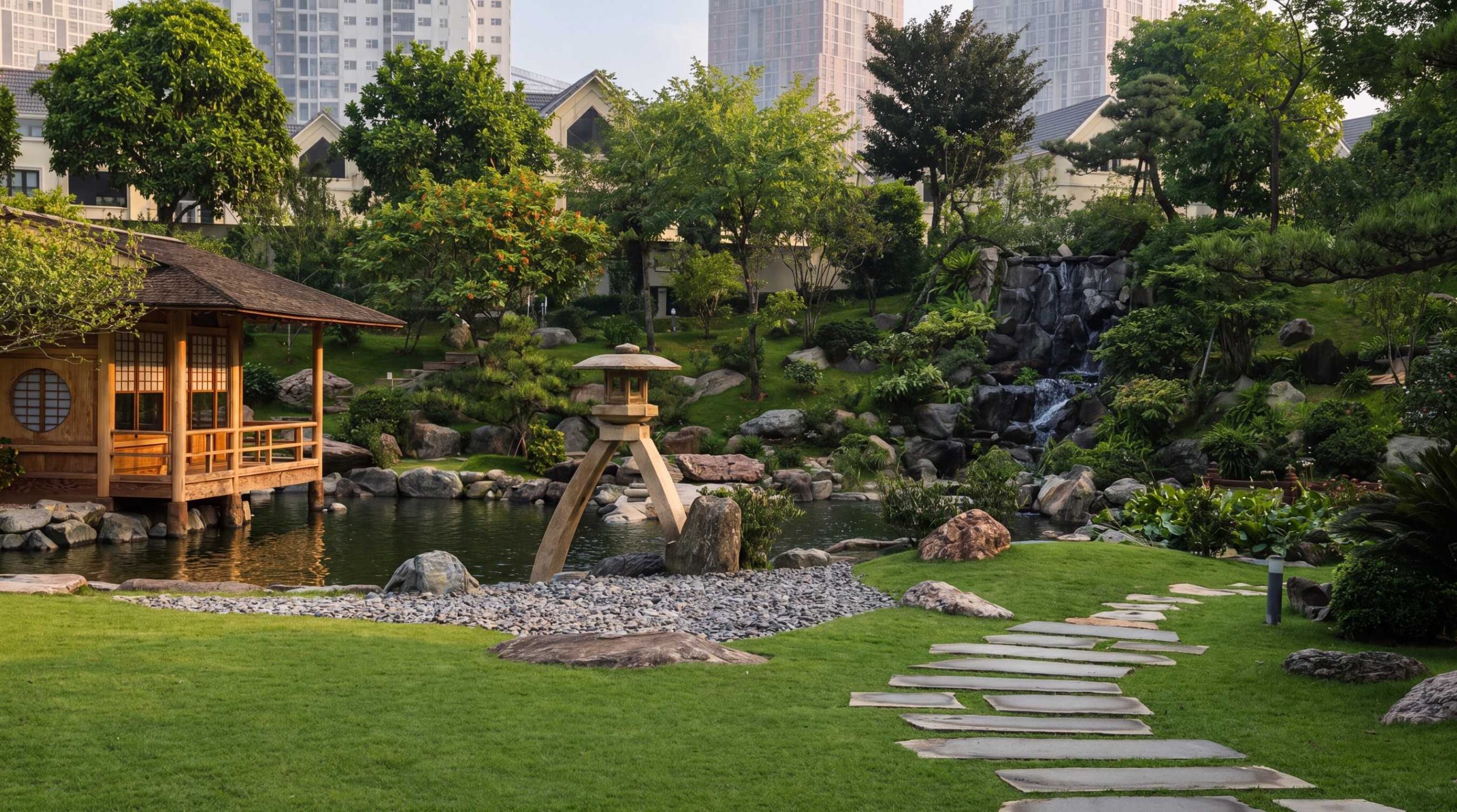
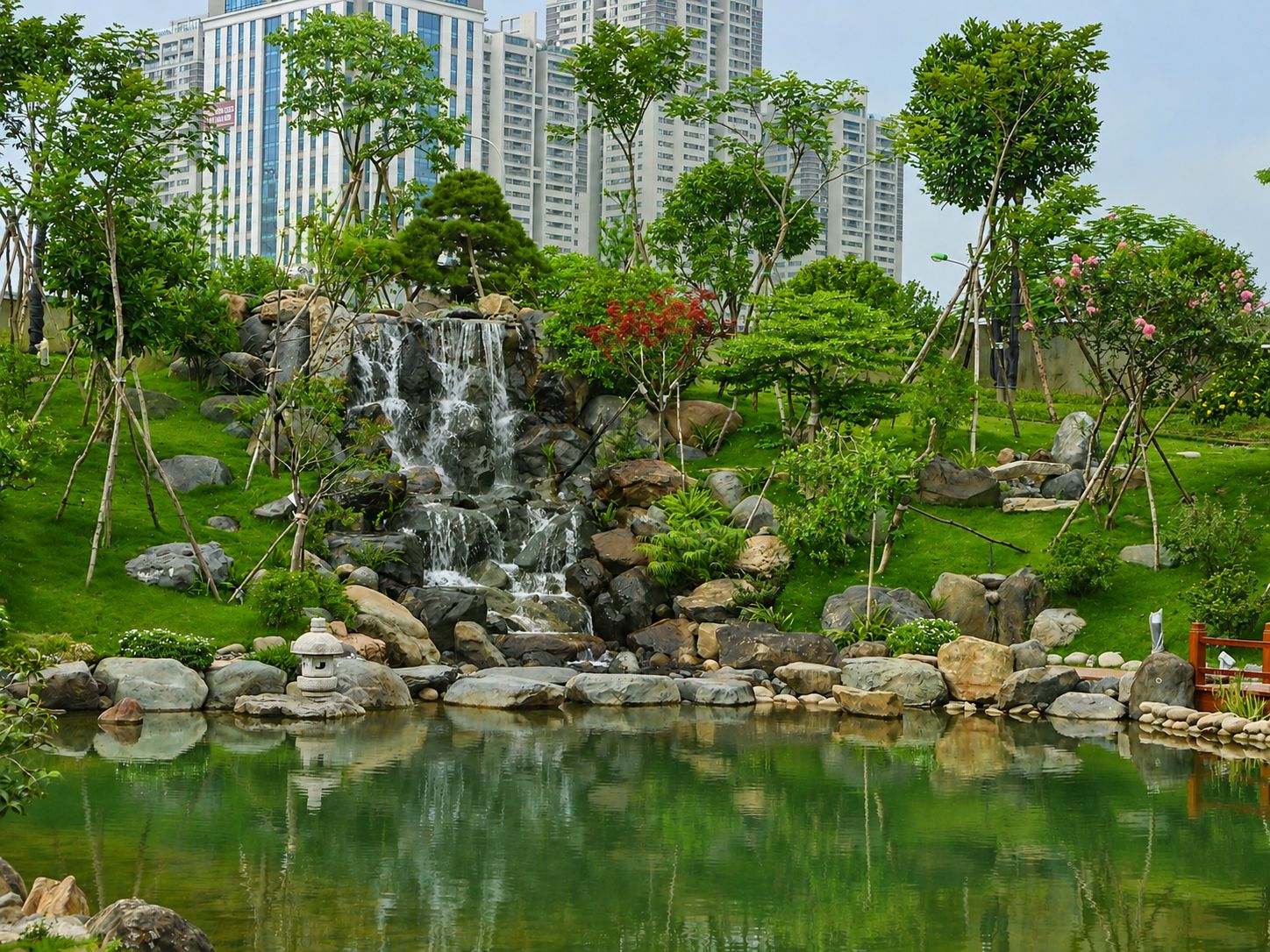
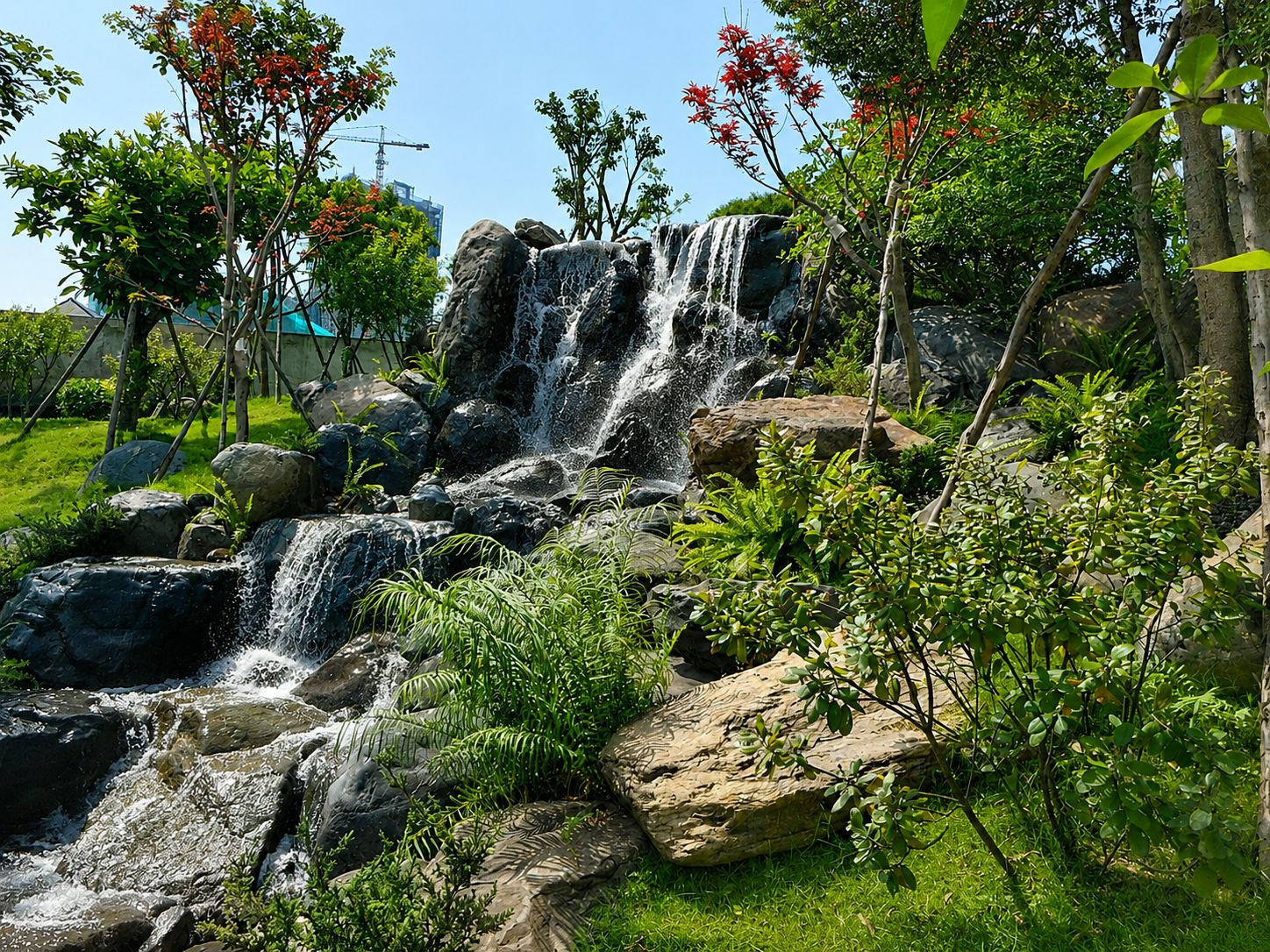
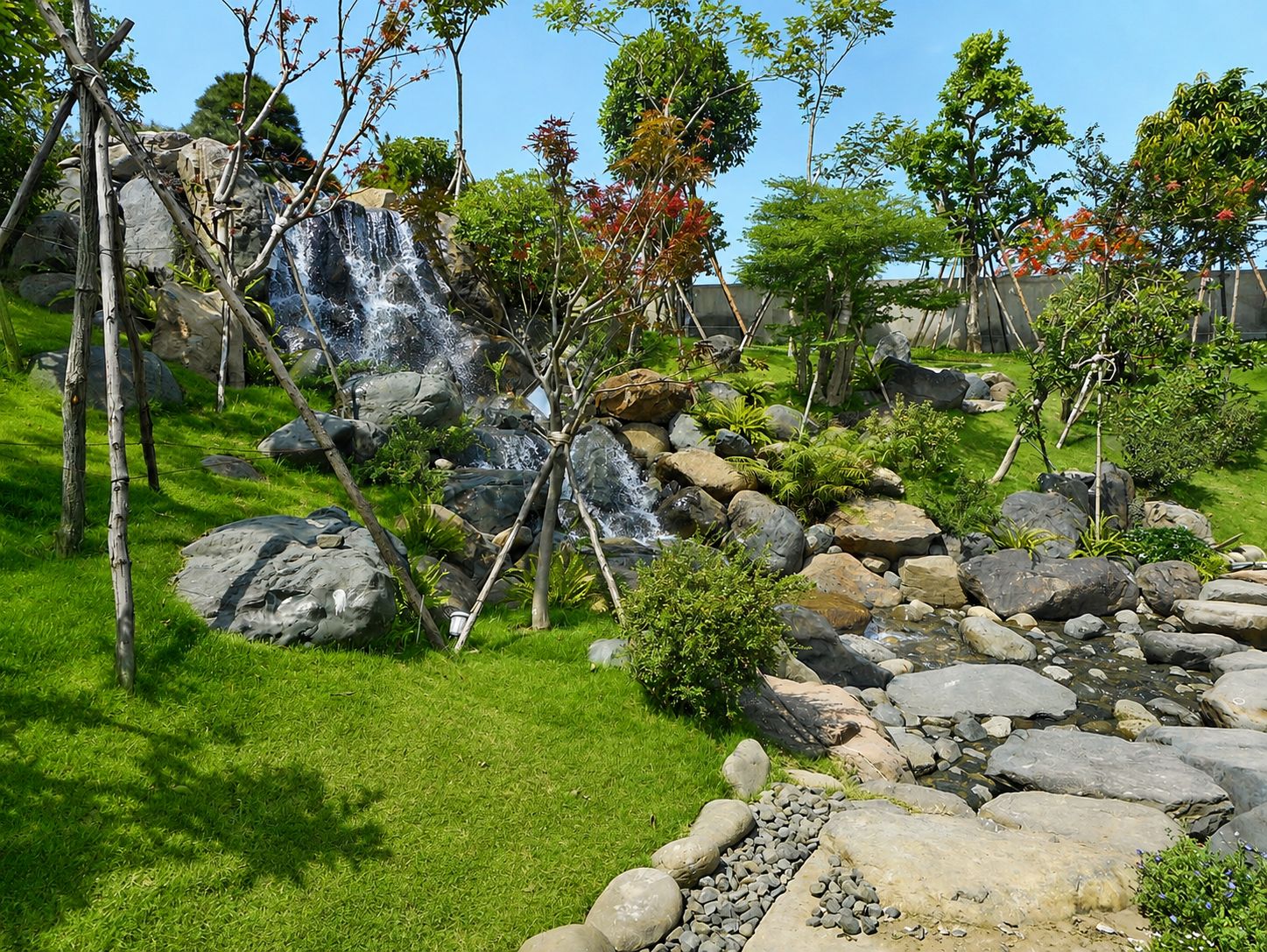
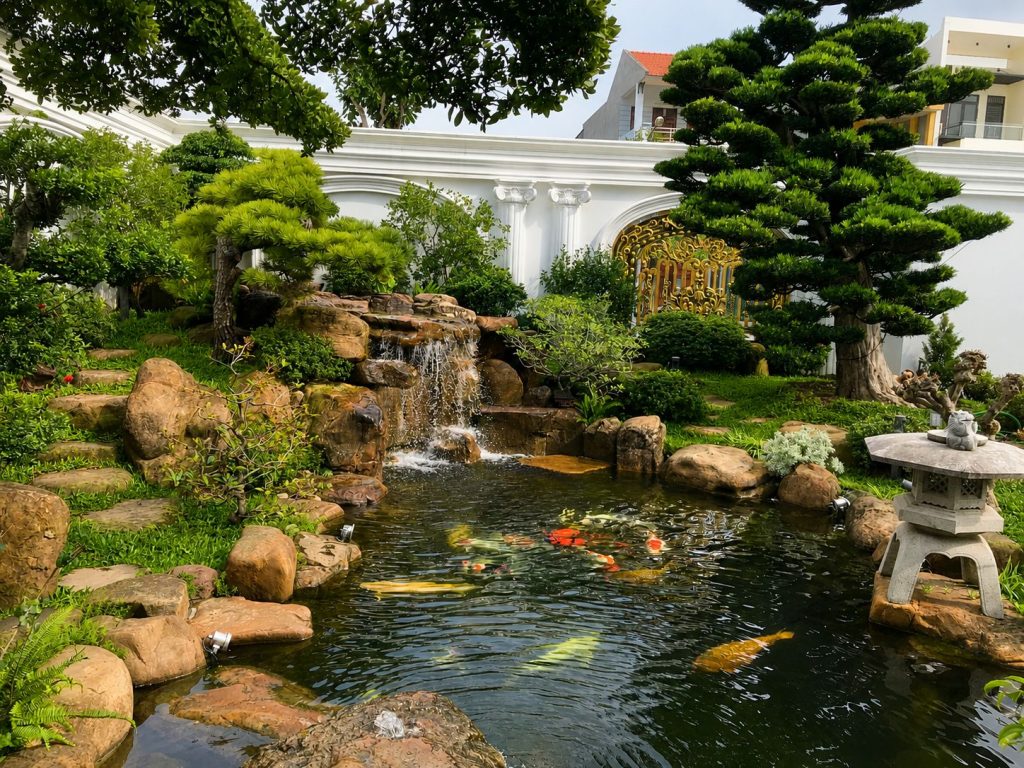
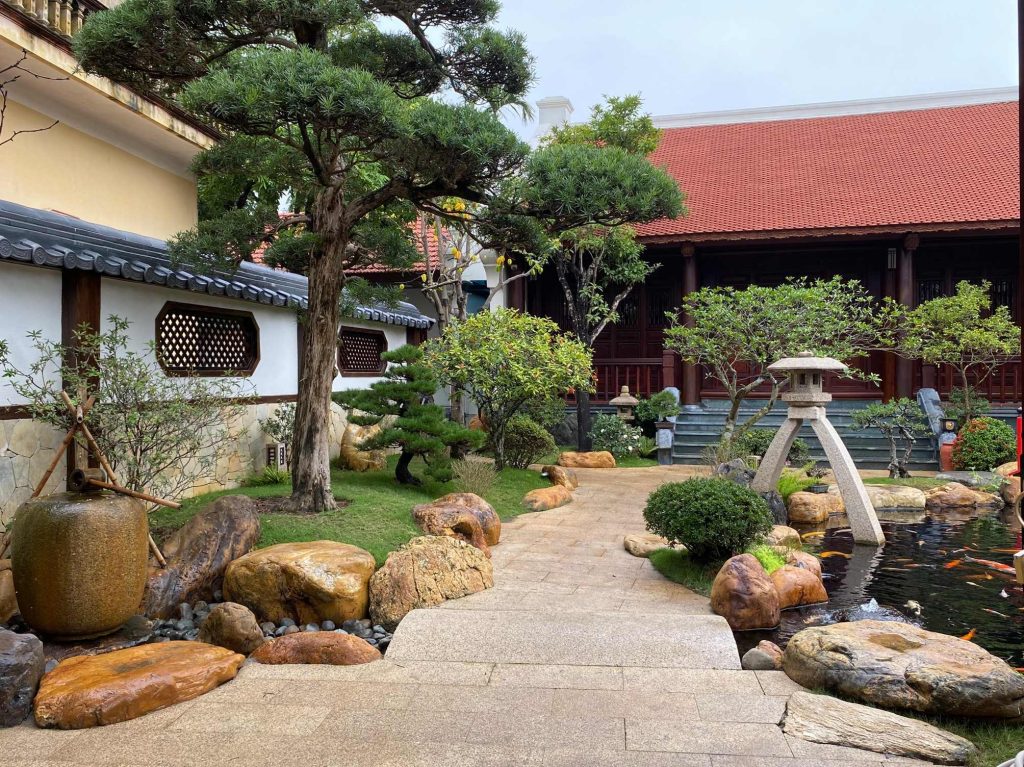
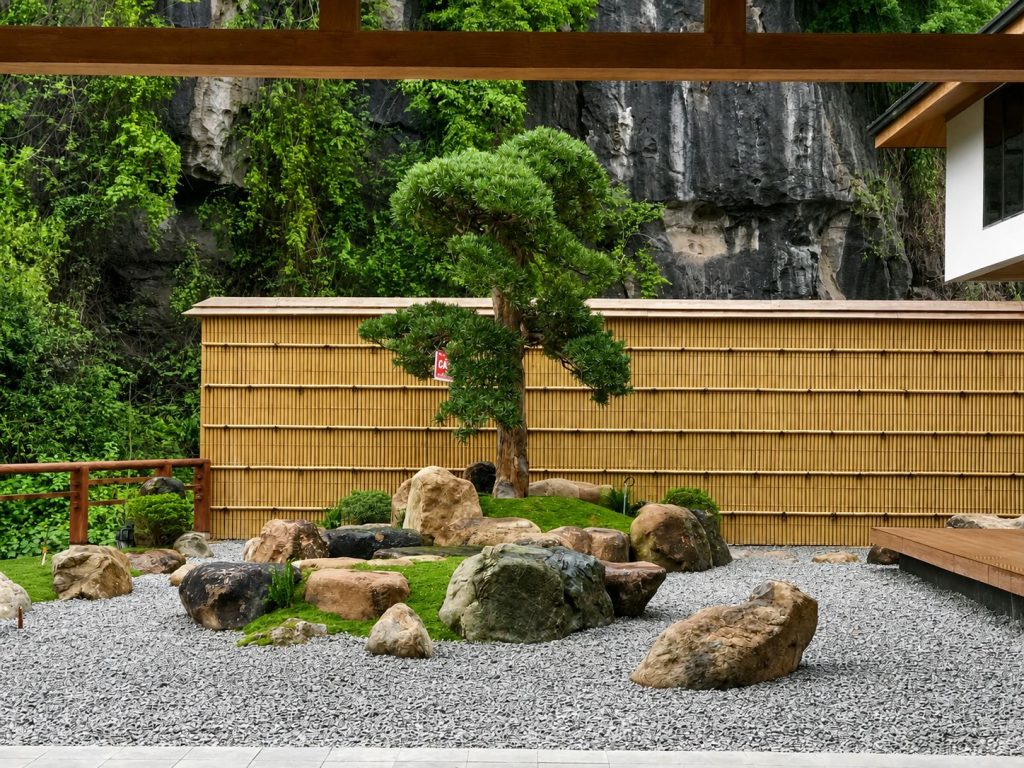
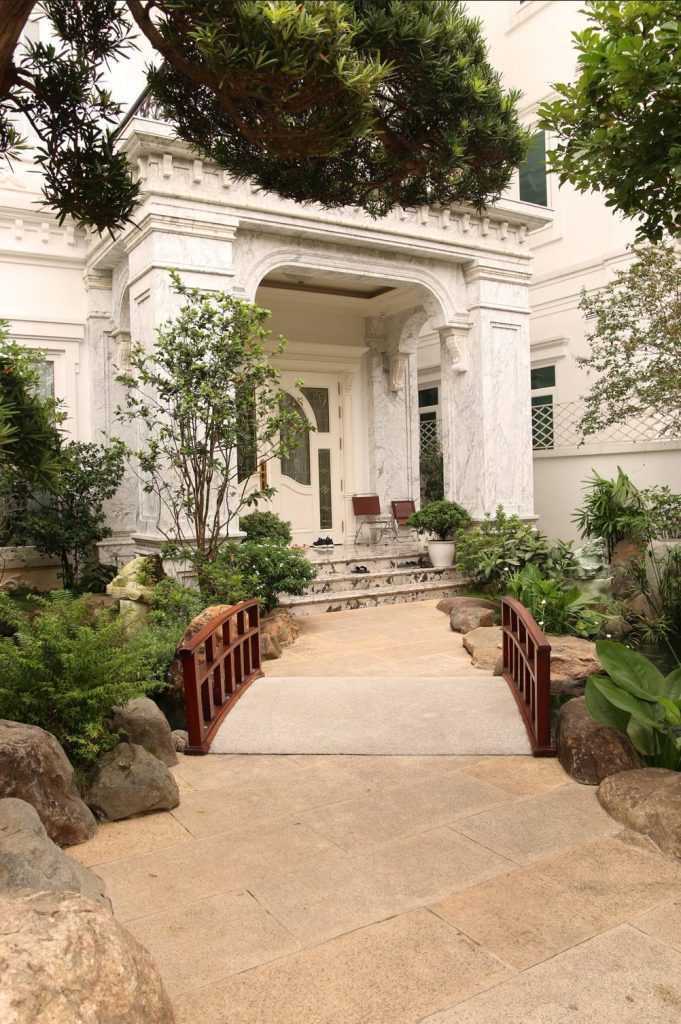
This Japanese garden was designed by Japanese landscape designer and stone sculptor Yasushi Hori for the private residence of the Chairman of Nam Cuong Group in Ha Dong, Hanoi, Vietnam.
Designer: Yasushi Hori. A renowned Japanese stone sculptor and landscape designer, internationally recognized for creating authentic Japanese gardens that harmonize natural stone, water, trees, and architecture into timeless living landscapes.
Project: Japanese Garden at the Nam Cuong Group Chairman’s Villa.
Location: Ha Dong District, Hanoi, Vietnam.
Project Type: Private Residential Japanese Garden.
Concept & Design:
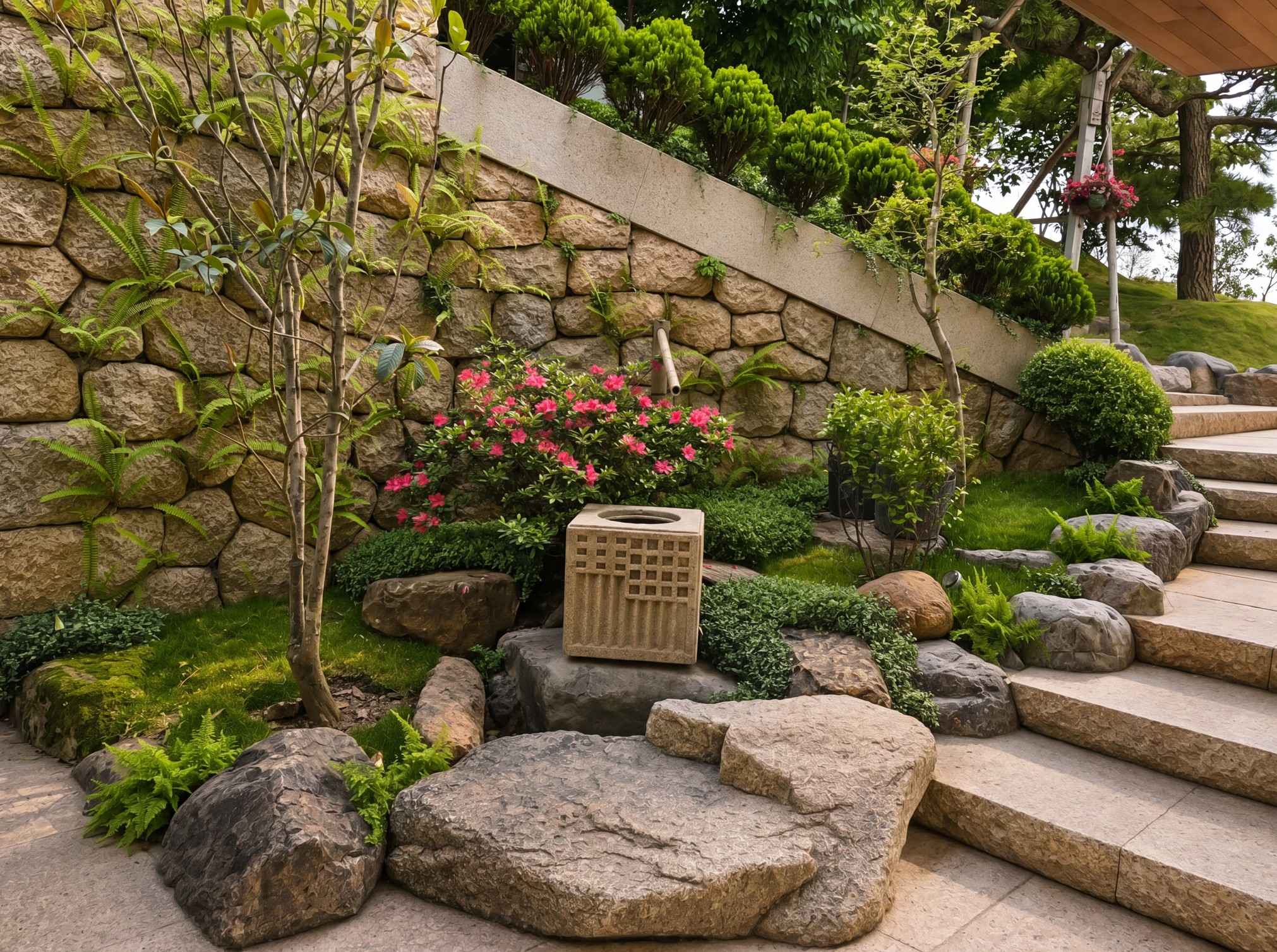
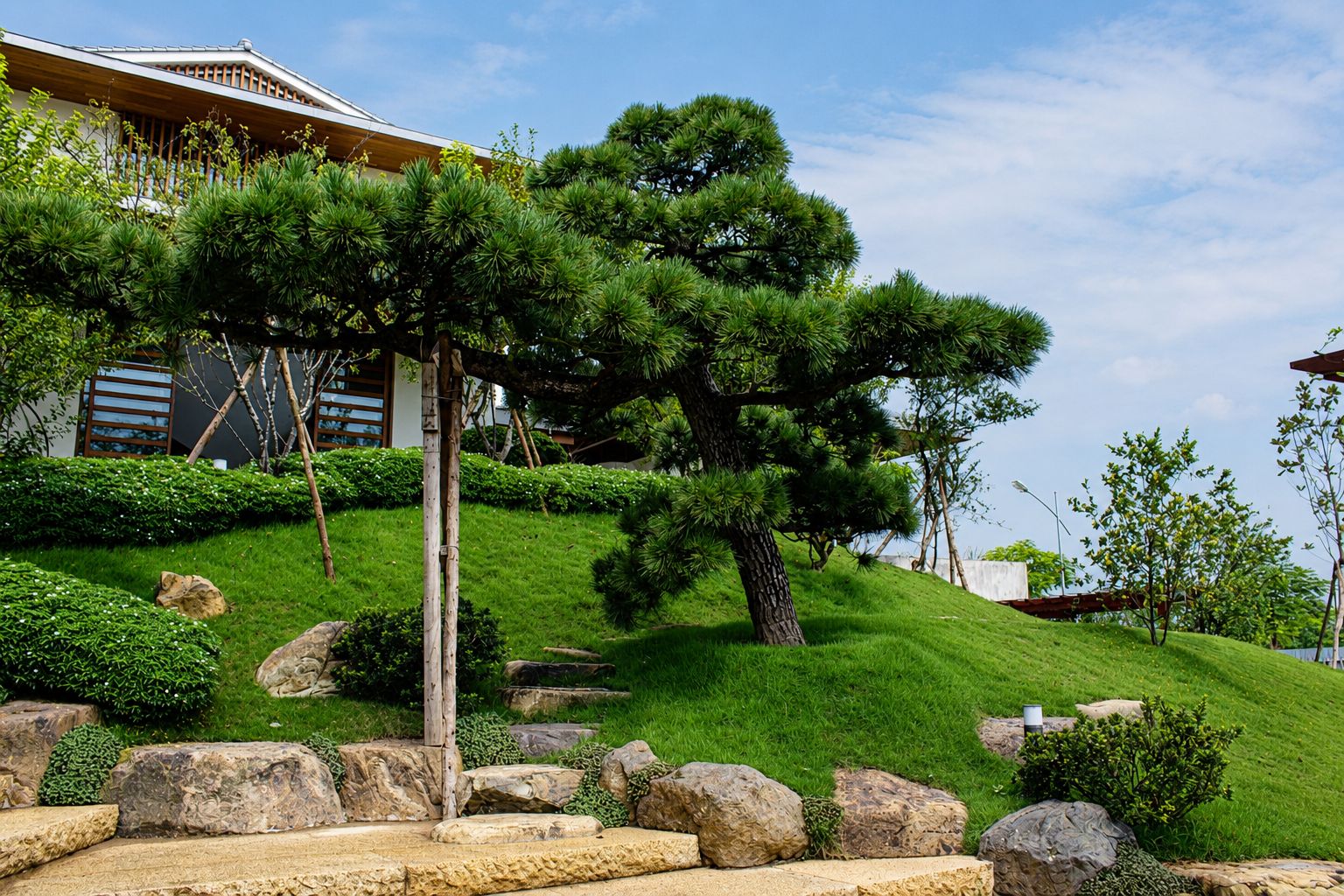
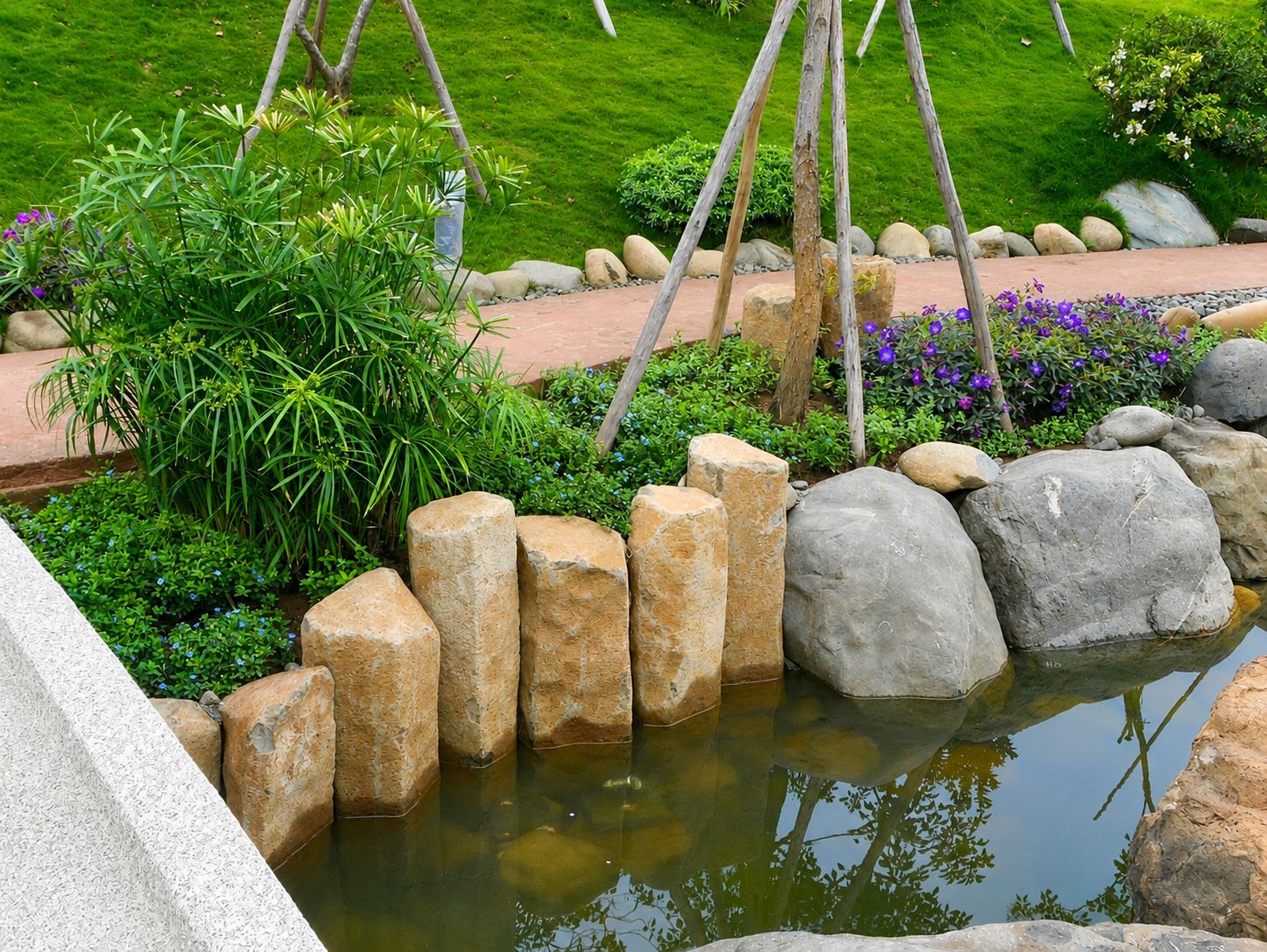
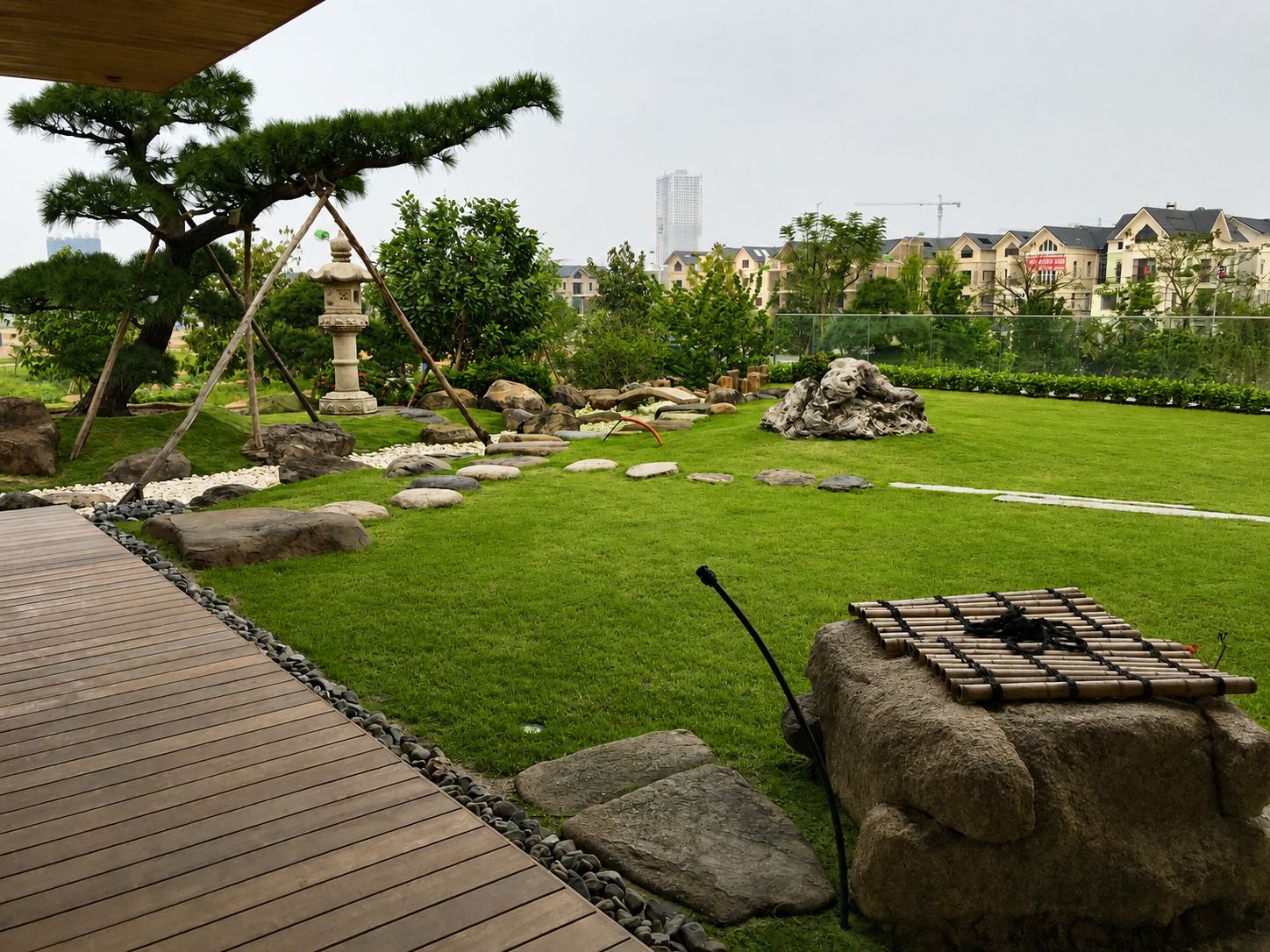
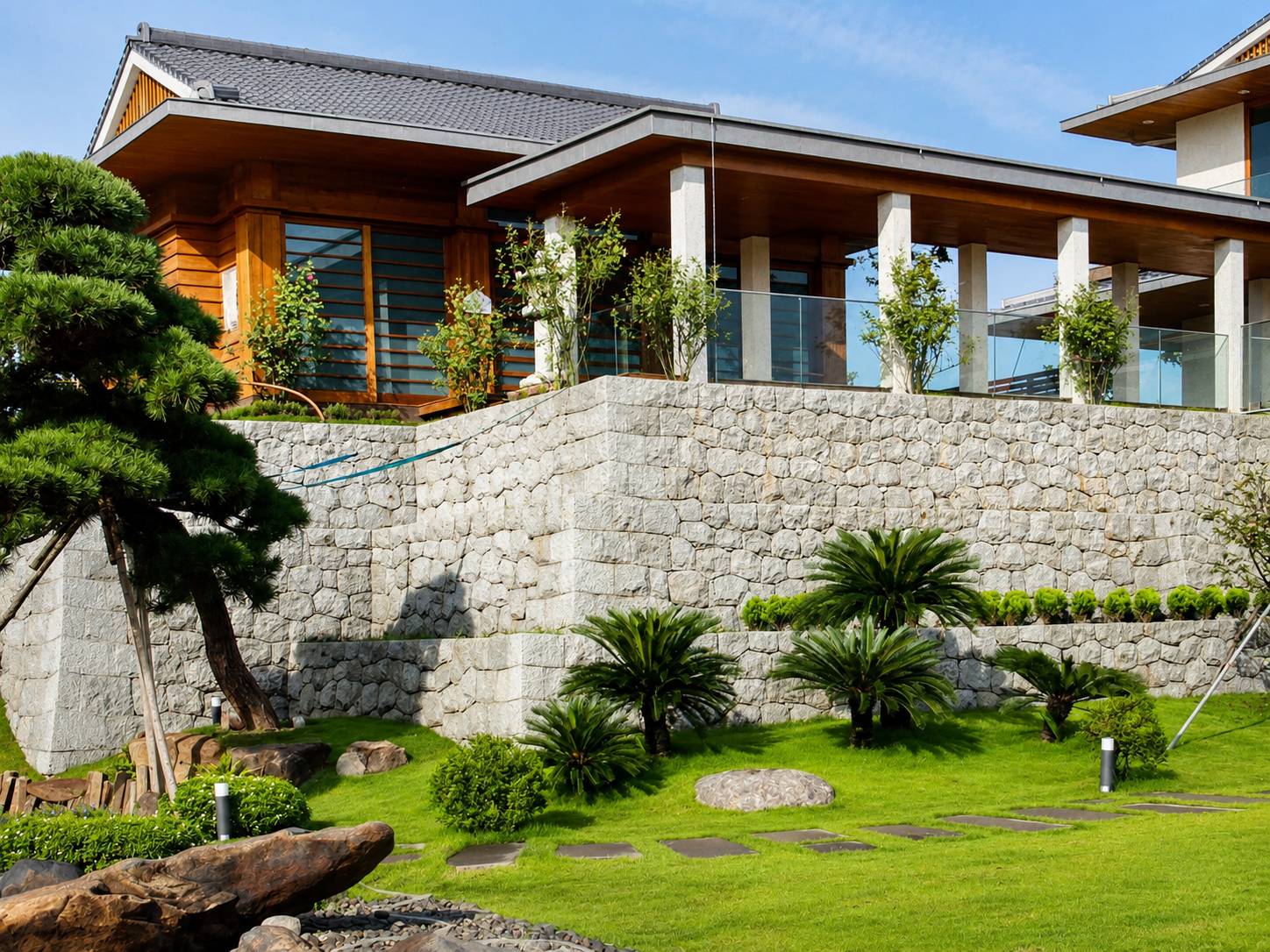
Set within the expansive grounds of a contemporary Japanese-inspired villa, this landscape was conceived as a living expression of nature, tranquility, and timeless craftsmanship. The site’s dramatic topography allowed the garden to be organized into a sequence of elevated lawns, stone retaining walls, cascading waterfalls, reflective ponds, and meandering streams that connect every outdoor space into one harmonious composition.
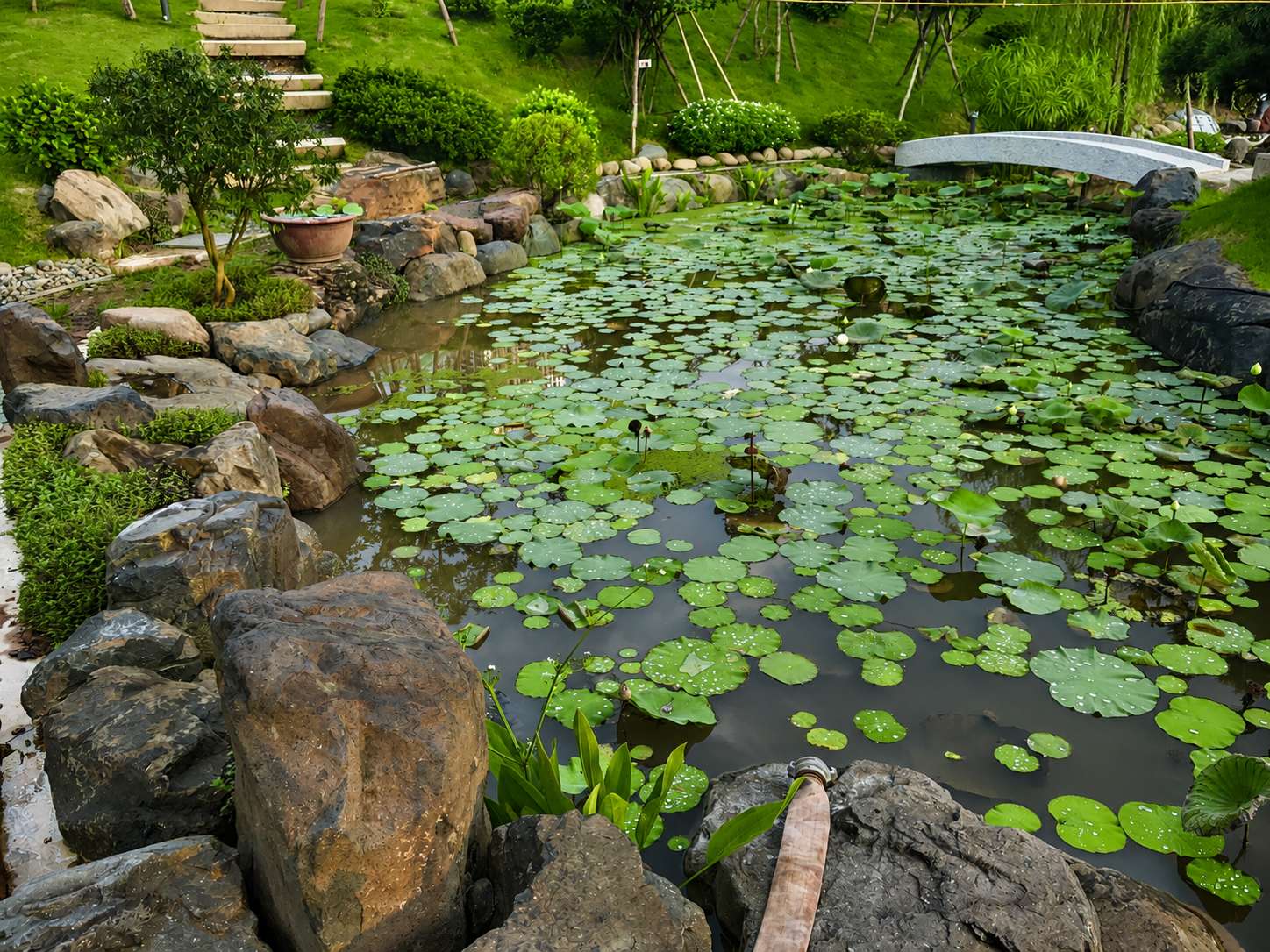
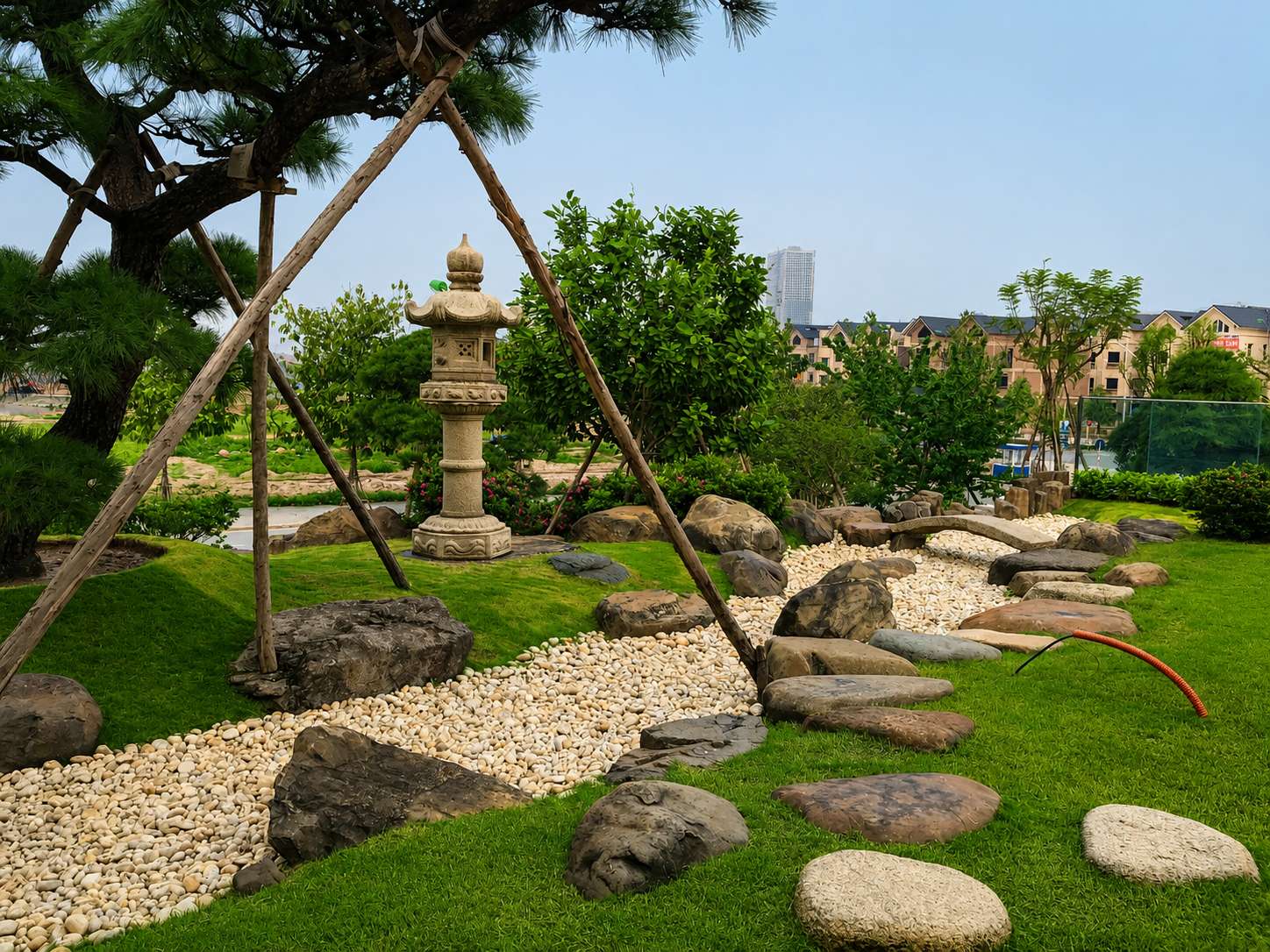
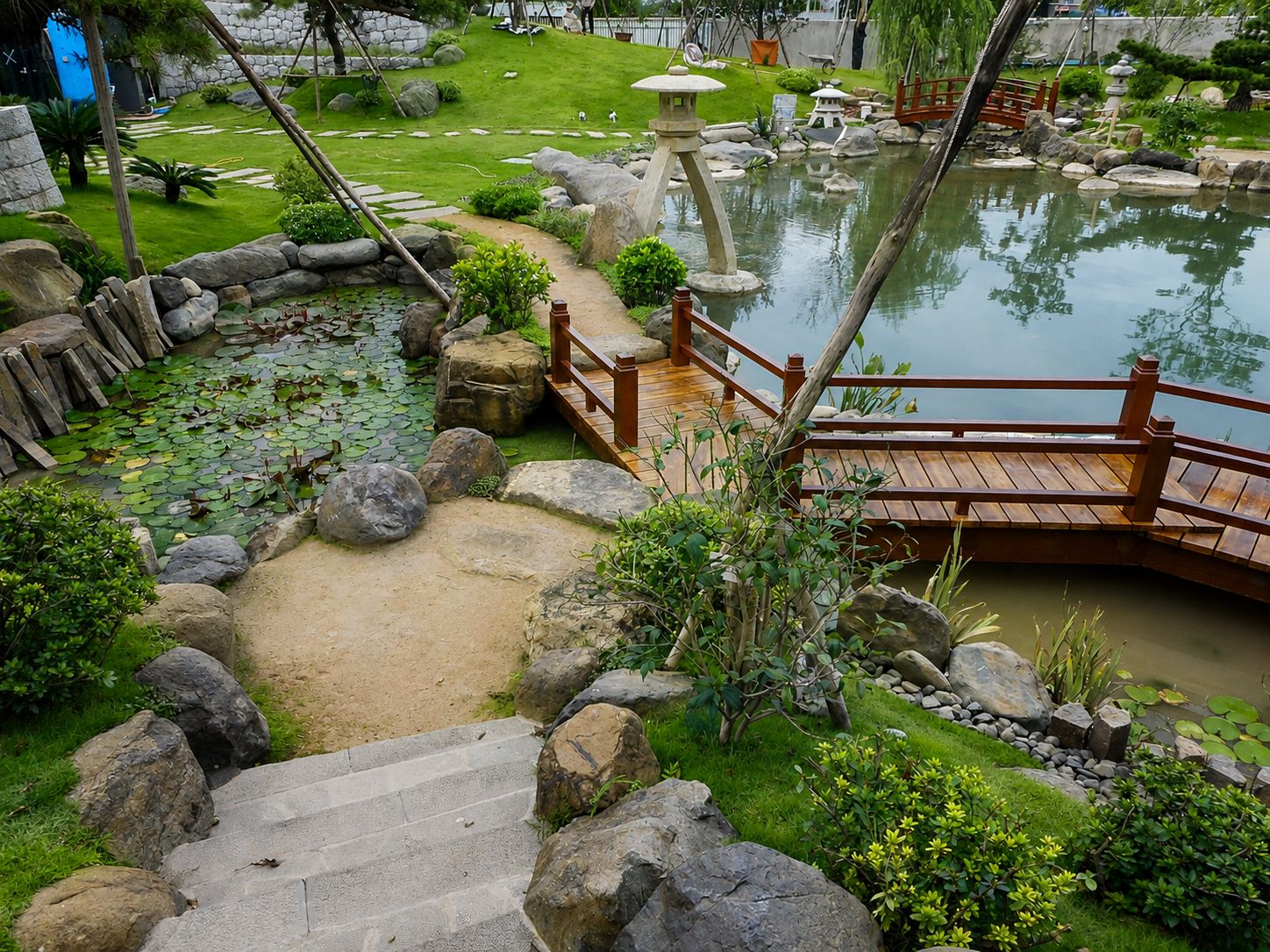
Natural boulders were individually selected and positioned following traditional Japanese stone-setting principles, establishing the structural framework of the landscape. Mature Japanese black pines, carefully trained and sculpted, provide strong visual character while balancing the expansive open lawns. Stone lanterns, curved bridges, stepping stones, dry riverbeds, lotus ponds, and a traditional Japanese pavilion create moments of discovery throughout the garden, encouraging visitors to experience the landscape from multiple perspectives.
Water serves as the central element of the design. Beginning with a cascading waterfall at the highest point of the site, it flows naturally through streams and ponds before gathering into a tranquil central lake, reflecting both the surrounding vegetation and the architecture. Every transition between stone, water, planting, and open space was meticulously considered to achieve balance, rhythm, and seasonal beauty.
The result is a refined Japanese garden that seamlessly integrates traditional landscape philosophy with contemporary residential architecture, offering a peaceful retreat where craftsmanship, nature, and everyday living exist in perfect harmony.